HVAC Warranty Guide: 8 Things Covered (And What’s Not)
HVAC warranty coverage is one of the most misunderstood aspects of owning a heating and cooling system, and that misunderstanding costs homeowners real money every year. A warranty claim that gets denied because the system was not registered on time, or a repair bill that arrives because the homeowner assumed labor was covered when it was not, are both entirely preventable with a clear understanding of how HVAC warranties actually work. If you are considering a new system or trying to understand what protection you already have, this guide breaks down everything you need to know.
Here is what we will cover:
- The three types of HVAC warranties: Manufacturer, labor, and extended coverage explained.
- 8 things typically covered: What most standard warranties protect against.
- What is not covered: The exclusions that catch homeowners off guard.
- Registration requirements: Why a 60-day window can mean thousands of dollars.
- How Eastergard HVAC protects your investment: What our warranty coverage looks like.
The Three Types of HVAC Warranty Coverage

Before getting into what is and is not covered, it helps to understand that HVAC warranty protection comes from three distinct sources. Most homeowners are aware of one but not all three, which leaves gaps in their understanding of what they are actually protected against.
Manufacturer Parts Warranty
The manufacturer warranty comes directly from the brand that made the equipment, such as American Standard or Mitsubishi. It covers the cost of replacement parts that fail due to manufacturer defect within the warranty period. It does not cover labor, meaning the cost of a technician’s time to diagnose and install the replacement part is not included. Most residential systems carry a 5-year base parts warranty that extends to 10 years when the equipment is registered within the required window after installation.
Contractor Labor Warranty
The labor warranty comes from the HVAC contractor who installed the system, not the manufacturer. It covers the cost of the technician’s time to diagnose and repair issues related to the installation itself. Labor warranties typically last one year on a standard installation, though contractors who offer maintenance plans or extended service agreements may provide longer coverage. South Carolina code requires a minimum one-year labor warranty on permitted installations.
Extended Warranty or Service Contract
Extended warranties go beyond the standard manufacturer and labor coverage, either by extending the parts coverage period, adding labor coverage, or both. These can come from the manufacturer, the installing contractor, or third-party warranty providers. The value of extended coverage depends heavily on the terms, what is excluded, and whether annual maintenance requirements must be met to keep the coverage active.
8 Things Typically Covered by an HVAC Warranty
These eight items represent what most standard manufacturer parts warranties cover on residential HVAC systems. Specific coverage varies by brand and product line, so always confirm the details for your specific equipment.
1. Compressor
The compressor is the most expensive component in an air conditioning or heat pump system, and most manufacturers provide their strongest warranty coverage on this part. American Standard, for example, covers the compressor for 10 years on registered systems. Because compressor replacement can cost $1,500 to $3,500 or more in labor and parts, this coverage is one of the most financially significant protections the manufacturer warranty provides.
2. Heat Exchanger
The heat exchanger in a gas furnace separates combustion gases from the air supply and is covered under most manufacturer warranties, often with longer coverage periods than other components. Some manufacturers offer lifetime heat exchanger warranties on qualifying furnace models. Given that a cracked heat exchanger presents both a safety risk and a significant repair cost, this coverage matters.
3. Coils
Both the evaporator coil inside the air handler and the condenser coil in the outdoor unit are typically covered under the manufacturer parts warranty. Coil failures from manufacturing defects, such as premature leaks in the refrigerant circuit, fall within warranty coverage. Coil damage from physical impact, improper installation, or operating the system with incorrect refrigerant levels typically does not.
4. Control Boards and Electrical Components
Circuit boards, thermistors, sensors, and other factory-installed electrical components are generally covered under the manufacturer warranty against defects. These components can be expensive to replace, with control boards often running $200 to $600 for the part alone, making this coverage meaningful on systems that experience electronic failures within the warranty period.
5. Fan Motors
Blower motors in the indoor air handler and condenser fan motors in the outdoor unit are covered under most manufacturer warranties. Motor failures due to manufacturing defects within the warranty period qualify for parts replacement coverage. Motor failures due to running the system with restricted airflow from a consistently clogged filter, which accelerates motor wear, may not.
6. Refrigerant Metering Devices
Expansion valves, orifice tubes, and other refrigerant metering components that come factory-installed are typically covered. These components affect refrigerant flow through the system and can cause significant performance issues when they fail.
7. Valves and Switches
Factory-installed pressure switches, reversing valves on heat pumps, and service valves are generally included in parts warranty coverage. The reversing valve is particularly important for heat pump owners since it is the component that switches the system between heating and cooling modes.
8. Factory-Installed Accessories
Some manufacturers extend parts warranty coverage to factory-installed accessories such as humidifiers, UV lights, or air purifiers that ship as part of an integrated system. Coverage for add-on accessories installed separately varies significantly by brand and product.
What HVAC Warranties Typically Do Not Cover

Understanding the exclusions is just as important as understanding what is covered. These are the most common categories that warranty claims are denied on.
Labor Costs
The most important exclusion in nearly every manufacturer warranty is labor. When a covered part fails under warranty, the manufacturer provides a replacement part at no cost. The homeowner still pays the technician’s time to diagnose the problem, remove the failed component, install the replacement, test the system, and handle refrigerant recovery and recharge if applicable. Labor costs on a warranty repair can run $200 to $600 or more depending on the complexity, which surprises many homeowners who assumed the warranty covered the full repair cost.
Damage From Improper Installation
A warranty covers manufacturer defects, not installer errors. If a system was improperly installed and that installation error causes a component to fail, the manufacturer warranty does not cover the resulting damage. This is one of the strongest arguments for using a licensed, experienced contractor for any HVAC installation.
Damage From Lack of Maintenance
Most manufacturer warranties explicitly require that the system receive annual professional maintenance to remain valid. A compressor failure in a system that has never been serviced is unlikely to be honored under warranty, even if the compressor is within its coverage period. Documentation of annual service visits is the evidence manufacturers require when evaluating warranty claims. We are proud to serve home and business owners in Five Forks, SC, and nearby communities with HVAC maintenance, installations, and warranty support.
Consumable Components
Filters, belts, fuses, and other consumable parts that require routine replacement are almost universally excluded from manufacturer warranty coverage. These are considered routine maintenance items, not defective components.
Damage From External Causes
Lightning strikes, power surges, flooding, pest damage, and physical damage from external causes are not covered under manufacturer warranties. Homeowner’s insurance may cover some of these scenarios, and surge protectors installed on the outdoor unit can reduce electrical damage risk from power events.
Refrigerant
Refrigerant itself is not covered under manufacturer warranties. If a warranty repair requires recharging the system after a covered component replacement, the refrigerant cost is the homeowner’s responsibility. Given current refrigerant pricing, this can add $100 to $400 to the cost of a warranty repair depending on system size and refrigerant type.
The Registration Requirement That Costs Homeowners Thousands
The single most financially significant aspect of HVAC warranty management is the registration window, and it is the one that most homeowners miss. American Standard’s warranty page states directly that the Registered Limited Warranty can extend coverage to 10 years if the product is registered within 60 days of installation, with unregistered systems reverting to the base 5-year term.
Most major manufacturers follow the same structure. Register within 60 to 90 days of installation and parts coverage doubles from 5 to 10 years. Miss the window and the base term applies regardless of how new the system is. On a compressor replacement at year 7, the difference between a registered and unregistered warranty is the difference between a covered part and a $1,500 to $2,200 parts bill.
- Register immediately after installation: The registration window starts on the installation date, not when you get around to it.
- Keep your installation documentation: Model numbers, serial numbers, and installation date are required for registration and for filing any future warranty claim.
- Confirm registration was completed: Eastergard HVAC handles warranty registration for equipment we install and confirms completion with every customer.
Eastergard HVAC’s Warranty Coverage
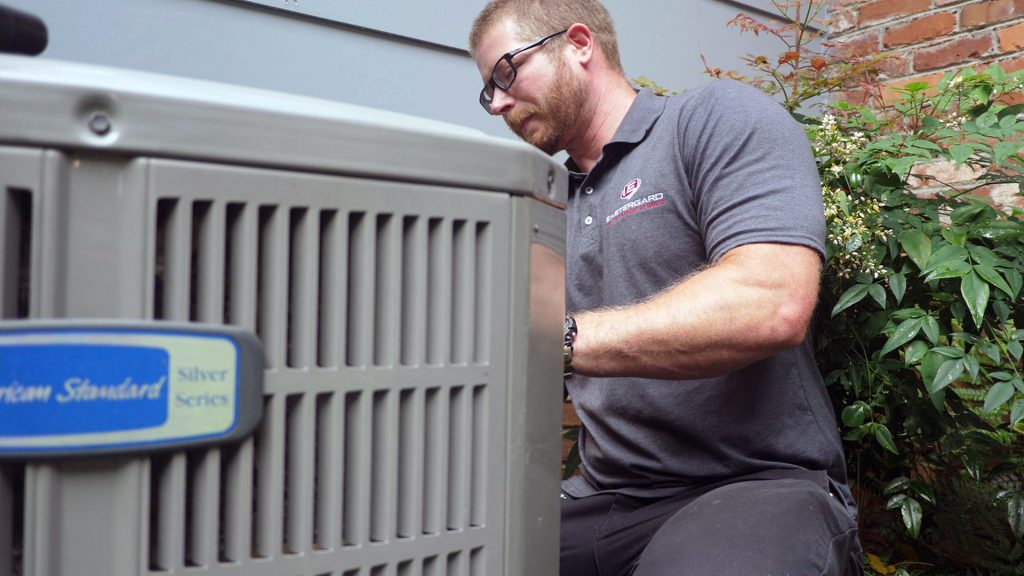
Eastergard provides layered warranty protection that goes beyond the standard manufacturer coverage.
- Parts warranty on Eastergard-installed equipment: Full manufacturer parts warranty coverage, with registration handled at installation to ensure the full 10-year term is activated where applicable.
- Parts warranty on equipment not installed by Eastergard: For service calls on equipment installed by others, Eastergard covers the parts used in the repair.
- Labor warranty on repairs: A one-year labor warranty on repairs Eastergard performs on your equipment.
- Extended labor warranty through maintenance plan: Eastergard’s maintenance plan extends labor warranty coverage from 2 to 10 years on the Better Plan and from 2 to 15 years on the Best Plan for equipment purchased from Eastergard. This transforms the standard one-year labor warranty into meaningful long-term protection.
How to Protect Your HVAC Warranty
These steps protect coverage that most homeowners paid for but may not be taking full advantage of.
| Action | Why It Matters |
| Register within 60 days of installation | Doubles parts coverage from 5 to 10 years on most brands |
| Schedule annual professional maintenance | Required by most manufacturers to keep warranty valid |
| Keep all service documentation | Required evidence for warranty claims |
| Use licensed contractors for all work | DIY repairs or unlicensed work voids most warranties |
| Address repairs promptly | Deferred repairs that cause secondary damage may not be covered |
| Check warranty before authorizing repairs | Confirms whether a part is covered before paying out of pocket |
Frequently Asked Questions About HVAC Warranties
These are the questions we hear most often from homeowners navigating warranty coverage in the Upstate South Carolina area.
Does my HVAC warranty transfer if I sell my home?
Generally, manufacturer parts warranties transfer to subsequent owners but at the base term rather than the registered term, and measured from the original installation date rather than the sale date. A system installed 6 years ago with a 10-year registered warranty would transfer with 4 years of remaining coverage. Confirm transfer terms with the specific manufacturer for your equipment.
My system is still under warranty but the repair was denied. Why?
The most common reasons for denied warranty claims are missing registration, lapse in annual maintenance documentation, damage from improper installation or external causes, or the failed component falling into an excluded category like refrigerant or consumables. Eastergard HVAC verifies warranty status before quoting any repair so there are no surprises.
Should I purchase an extended warranty or home warranty for my HVAC system?
Extended warranties from the manufacturer or installing contractor tend to offer more predictable coverage than third-party home warranties, which often exclude pre-existing conditions and have significant claim limitations. The Eastergard maintenance plan’s extended labor warranty is the most straightforward way to extend labor coverage on equipment we install. For third-party options, read the exclusions carefully before purchasing.
How do I find out if my system is registered and what warranty it has?
Start by locating the system’s model and serial number from the data plate on the outdoor unit and indoor air handler. Most manufacturers offer an online warranty lookup tool where you can enter the serial number to confirm registration status and coverage dates. Eastergard HVAC can also look up warranty status on any system we have serviced or installed.
Protect Your Investment With Eastergard HVAC
Understanding your HVAC warranty is only half of protecting the investment. The other half is making sure the system is properly registered, consistently maintained, and serviced by a licensed contractor whose work you can document. Eastergard HVAC has been handling all of this for Greenville area homeowners since 1989, and our maintenance plan is specifically designed to keep your warranty valid while extending our own labor coverage well beyond the standard one-year term.
Contact Eastergard HVAC today to confirm your warranty status or learn more about our maintenance plan. Call us at 864-235-2935 or email us at info@eastergard.com, and we will make sure your system is protected from every angle.
Recent Articles POSTS