Skipping Semi Annual HVAC Maintenance? 7 Risks You Should Know
Semi Annual HVAC maintenance is one of those recurring expenses that is easy to postpone or overlook, especially when the system seems to be running fine. But a system that appears to be operating fine can silently be losing efficiency, accumulating wear on critical components, and building toward an expensive failure that a routine maintenance visit would have caught. If you have been putting off scheduling your seasonal maintenance, this guide covers the seven most significant risks that come with skipping service and why the cost of prevention is almost always lower than the cost of an unplanned failure.
Here is what we will cover:
- Why semi-annual maintenance matters more than most homeowners realize: The compounding effect of deferred service.
- 7 risks of skipping HVAC maintenance: What actually happens when service is skipped year after year.
- What a professional tune-up actually covers: The specific inspections that prevent the risks.
- How often Eastergard HVAC recommends service: Frequency guidance for different system types.
- How to get started: Making maintenance a habit rather than an afterthought.
Why Skipping Semi-Annual HVAC Maintenance Costs More Than It Saves
The logic behind skipping a maintenance visit seems reasonable on the surface. If the system is cooling or heating the home without obvious problems, why spend money on a maintenance plan? The problem is that HVAC systems degrade gradually and quietly. The decline is rarely dramatic enough to notice until a component fails or the utility bill climbs significantly, at which point the repair cost almost always exceeds what several years of preventive service would have cost.
ENERGY STAR confirms that a yearly tune-up of your heating and cooling system can improve efficiency and comfort, much like a tune-up for your car can improve gas mileage, and research from the U.S. Department of Energy estimates that HVAC systems can lose up to 5 percent of their operating efficiency every year they go without professional maintenance. After five years without service, a system originally rated at 18 SEER2 may be operating closer to 14 SEER2, meaning the homeowner is paying for significantly more electricity than the equipment was designed to consume.
7 Risks of Skipping Semi Annual HVAC Maintenance
These seven risks represent the most common and most costly consequences of deferred HVAC service. They are not hypothetical; they are what actually happens in systems that go without professional attention year after year.
1. Steadily Rising Energy Bills
The most immediate and most measurable consequence of skipping semi annual maintenance is an increase in monthly energy costs. When filters are not replaced on schedule, evaporator and condenser coils accumulate layers of dust and debris, and motors run hot trying to keep up and begin to fail; the system consumes more electricity to deliver the same amount of cooling or heating. That efficiency loss compounds over time. A system that loses 5 percent efficiency per year is running meaningfully harder after just two or three seasons of deferred maintenance, and the homeowner pays the difference on every monthly utility bill.
- Dirty coils: Layers of debris builds up on the evaporator or condenser coil and acts as insulation, preventing heat transfer and forcing longer run times.
- Clogged filters: Restricted airflow makes the blower motor work harder on every cycle, directly increasing electricity consumption and causing premature failure of the part.
2. Unexpected Breakdowns at the Worst Possible Time
HVAC systems fail most frequently during periods of peak demand, which in South Carolina means the hottest stretches of July and August and the coldest nights of January. Those are also the periods when repair appointments are hardest to schedule and emergency service visits will add more upfront costs on the repair. Semi-annual maintenance visits catch the developing failures, failing capacitors, low refrigerant, worn contactors, and corroded electrical connections, that cause those breakdowns before they happen. A $175-$250 capacitor replacement caught during a spring tune-up is a fundamentally different financial event than an emergency service call in mid-July when the system fails completely.
- Capacitors and contactors: These components degrade gradually. Semi Annual testing identifies when they are approaching failure before they stop working entirely.
- Refrigerant levels: Low refrigerant from a developing leak does not announce itself until the system can no longer cool effectively. Semi Annual checks catch the drop early.
- Electrical connections: Heat cycling causes connections to loosen over time. Tightening them during a tune-up prevents the arcing and component damage that follow.
3. Voided Manufacturer Warranty
Most HVAC manufacturers require documented semi annual professional maintenance as a condition of their warranty coverage. This is not fine print buried in the manual. It is a standard requirement that affects whether a warranty claim on a failed compressor, heat exchanger, or other major component will be honored. A homeowner who skips semi annual service for three years and then files a warranty claim on a compressor failure may find that the claim is denied because the maintenance record required by the manufacturer does not exist.
- Documentation matters: A reputable HVAC contractor provides written service records after every visit. Those records are the evidence that satisfies manufacturer warranty requirements.
- American Standard coverage: As an American Standard Platinum Dealer, Eastergard HVAC is familiar with the specific documentation requirements that protect warranty coverage on the equipment we install.
- Labor warranties: Eastergard’s own labor warranty on installed equipment also requires that the system be maintained, which is another reason semi annual service protects more than just the equipment. Labor warranties paired with a Good, Better, or Best plan can also extend the time period of the labor warranty.
4. Carbon Monoxide Risk From Undetected Heat Exchanger Cracks
For homes with gas furnaces, semi annual maintenance is not just about efficiency and longevity. It is a safety requirement. The heat exchanger is the component that separates combustion gases, including carbon monoxide, from the air circulating through the home. Heat exchangers can develop cracks over time due to thermal stress from heating and cooling cycles. A cracked heat exchanger allows carbon monoxide to enter the air supply without triggering a carbon monoxide detector unless concentrations reach detectable levels.
A licensed technician inspects the heat exchanger during every semi annual heating season tune-up. That inspection is the primary way cracked heat exchangers are caught before they become a health hazard. We are proud to serve home and business owners in Travelers Rest, SC, and nearby communities with HVAC maintenance, repairs, and installations.
- Visual inspection: Technicians inspect the heat exchanger for visible cracks, rust, and deterioration during the semi annual heating tune-up. When the entire heat exchanger cannot be evaluated, an Eastergard technician will use a borescope to ensure the entire heat exchanger has been inspected.
- Combustion analysis: Some maintenance visits include combustion analysis that can detect incomplete combustion consistent with a compromised heat exchanger.
- Carbon monoxide detectors: While required on every level of a home with gas appliances, detectors are a backup, not a substitute for semi annual inspection.
5. Shortened Equipment Lifespan

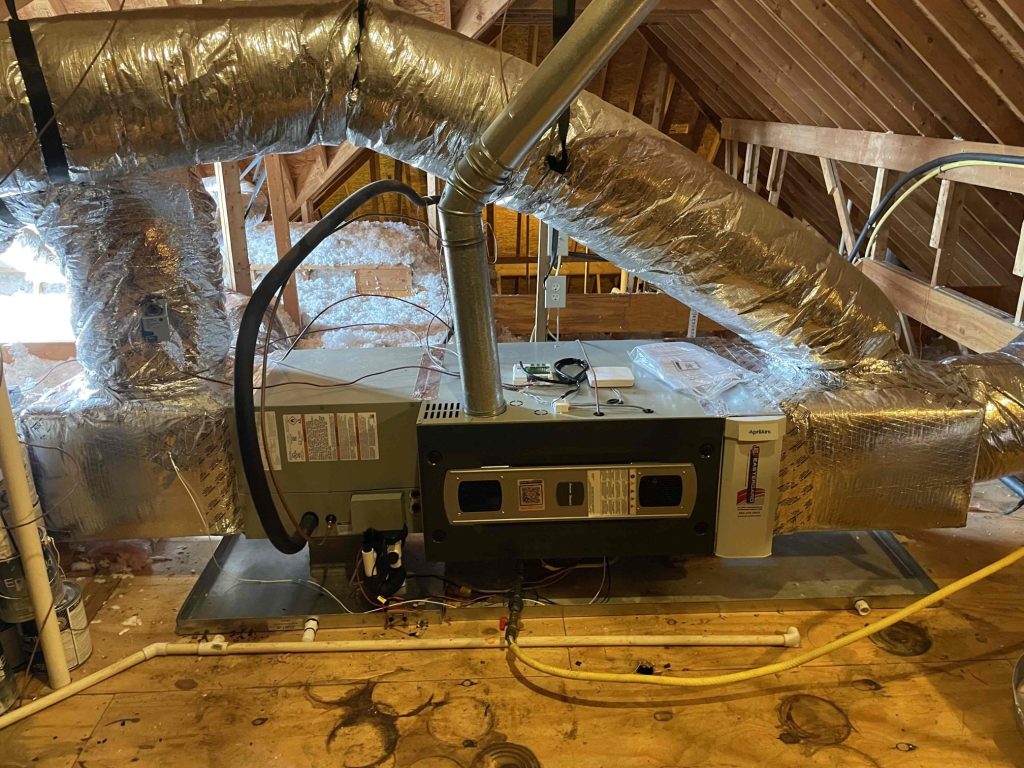
HVAC systems that receive consistent semi annual maintenance regularly reach or exceed their 12 to15-year expected service life. Systems that are consistently neglected often fail in 8 to 10 years, forcing a premature replacement that costs thousands more than the accumulated cost of the maintenance visits that could have prevented. Systems that operate without proper cleaning, inspection, and adjustment will accumulate wear faster than components that are maintained. That accelerated wear shortens the life of the compressor, blower motor, heat exchanger, and other major components.
- Compressor protection: The compressor is the most expensive component in the system. It is also the component most sensitive to operating under stress from low refrigerant, dirty coils, or electrical issues that semi-annual maintenance catches and corrects.
- Blower motor longevity: Capacitors that fall below the manufacturer’s guidelines will create undue stress on the motor and will cause the motor to fail prematurely.
- Overall system stress: A system that runs efficiently during every cycle accumulates far less total wear than one that fights through restricted airflow, dirty coils, and calibration drift on every cycle.
6. Poor Indoor Air Quality
A well-maintained HVAC system is one of the primary tools for managing indoor air quality in a South Carolina home. When maintenance is skipped, filters go unchanged beyond their service life, evaporator coils accumulate organic growth in the humid conditions that characterize the Upstate’s long cooling season, and duct systems that should be sealing conditioned air begin drawing in contaminants from attics and crawl spaces through developing leaks. The result is an air supply that is actively distributing dust, allergens, fungal spores, and other contaminants throughout the home.
- Filter replacement: Filters that are not changed on schedule become so compacted that they can no longer capture particles effectively, and in some cases shed previously captured material back into the airstream.
- Evaporator coil condition: Organic growth on the evaporator coil, driven by the combination of moisture and dust that accumulates in an unmaintained system, introduces biological contaminants into the air supply on every cooling cycle.
- Condensate drain maintenance: A clogged condensate drain pan creates standing water inside the air handler, which accelerates organic growth and can cause water damage to surrounding areas — including sheetrock damage to ceilings when the system is installed in an attic.
7. Missed Opportunity to Catch Small Problems Before They Become Big Ones
Perhaps the most underappreciated risk of skipping semi annual maintenance is the compounding nature of deferred problems. Identifying a refrigerant leak during a spring tune-up can remove the undue stress and prolonged downtime that come when the system fails during peak season. The same leak left unaddressed for a full cooling season can cause the evaporator to freeze,introduces additional strain on the compressor that is working to compensate for a low charge, and potentially causes irreversible compressor damage that can cost ten times as much had the issue been addressed during a previous maintenance visit.
Semi Annual maintenance is the mechanism that catches small problems while they are still small.
- Refrigerant monitoring: Semi Annual refrigerant level checks catch developing leaks before they affect system performance or cause component damage.
- Electrical inspection: Loose connections, failing capacitors, and corroded contactors found during a tune-up cost a fraction of what they cost after they cause a system failure.
- Performance baseline: A technician who services the same system annually builds a performance baseline that makes it easier to identify when something is trending in the wrong direction before it becomes a failure.
What a Professional HVAC Tune-Up Actually Covers
Understanding what is included in a professional maintenance visit helps homeowners evaluate what they are getting for the cost of the service.
| System Component | What Is Checked or Serviced |
| Air filter | Inspected and replaced if needed (additional charge if not provided by the customer) |
| Evaporator coil | Inspected; if cleaning is needed, a quote will be provided |
| Condenser coil | Inspected and cleaned during AC visit; cleaning is included with the Good, Better, and Best plans |
| Refrigerant level | Checked and documented |
| Electrical connections | Inspected and tightened |
| Capacitors and contactors | Tested and evaluated |
| Blower motor | Inspected |
| Condensate drain | Cleared and treated |
| Heat exchanger (heating season) Gas pressure (furnaces) | Inspected for cracks and deterioration Inspected and adjusted to manufacturer’s specifications |
| Thermostat | Tested and adjusted as needed |
| System performance | Temperature split measured and documented |
How Often Should HVAC Maintenance Be Scheduled?
Most manufacturers recommend two visits per year for optimal running conditions. Traditional split systems with a separate furnace and air conditioner benefit from two visits per year: AC maintenance in the spring to check refrigerant pressures and to clean the condenser coil, and heat maintenance in the fall to check gas pressure on a furnace. Heat pumps, which run year-round for both heating and cooling, also require two visits per year because both the cooling and heating functions need to be verified, and the reversing valve should be checked at each visit. Mini-splits follow the same twice-yearly schedule: an AC maintenance in the spring to clean the condenser coil, and a heat maintenance in the fall to clean the indoor blower wheel(s).
Frequently Asked Questions About Semi-Annual HVAC Maintenance
These are the questions we hear most often from homeowners who are evaluating whether to schedule a maintenance visit or continue putting it off.
How much does semi annual HVAC maintenance cost?
The maintenance cost varies according to the number of systems and the level of service requested. Eastergard HVAC’s maintenance plan provides two seasonal visits per year with priority scheduling, which reduces the per-visit cost and ensures the system is serviced before and during the cooling and heating seasons. The peace of mind of having the system properly maintained, as well as the priority service, allows every homeowner the comfort that their HVAC systems are in good hands.
My system seems to be running fine. Do I still need maintenance?
Yes. The risks covered in this guide, efficiency loss, developing refrigerant leaks, failing capacitors, heat exchanger cracks, and shortened equipment life, are all conditions that develop quietly without obvious symptoms until they have already caused significant damage. A system that seems fine is exactly the system that benefits most from a preventive check before a problem develops.
Does Eastergard HVAC offer a maintenance plan?
Yes. Eastergard HVAC offers four unique plans that combine priority scheduling for unforeseen outages and discounts on parts and labor. Eastergard’s maintenance plans are designed to create a constant pattern of reliable maintenance instead of skipped seasons and undue wear and tear on the HVAC equipment.
What if I have been skipping maintenance for several years?
Schedule a visit now rather than waiting for the system to fail. A technician can assess the current condition of the system, catch any developing issues, and give you an honest picture of what the system needs. Starting a maintenance schedule now extends the remaining life of the equipment even if some years have been missed.
Protect Your System With Eastergard HVAC
Consistent semi annual HVAC maintenance is the single most cost-effective thing a homeowner can do to protect their equipment, control energy costs, and avoid the stress of an unexpected system failure. Eastergard HVAC has been serving the Greenville area since 1989, and our licensed technicians approach every maintenance visit with the same honesty and attention to detail we bring to every job.
Contact Eastergard HVAC today to schedule your maintenance visit or enroll in our maintenance plan. Call or text us at 864-235-2935 or email us at info@eastergard.com, and we will make sure your system is ready for whatever the season brings.
Recent Articles POSTS