How to Clean AC Filter: 8 Tips to Improve Airflow, Longevity, and Performance
If you have been looking for simple ways to keep your AC running strong, your air filter is the best place to start. How to clean AC filter is a question more homeowners should be asking, because a neglected filter is one of the most common and most preventable causes of reduced airflow, higher energy bills, and early system wear. The good news is that filter maintenance is straightforward, inexpensive, and makes a measurable difference in how your system performs. This guide covers everything you need to know.
Here is what we will cover:
- Why your AC filter matters: What it does and what happens when it gets clogged.
- Reusable vs. disposable filters: How to know which type you have and how to handle each.
- Step-by-step cleaning process: Exactly how to clean a reusable air conditioner filter correctly.
- How often to clean or replace: The right schedule based on your home and usage.
- Signs your filter needs attention now: What to watch for between cleanings.
- When to call a professional: What filter maintenance can and cannot fix on its own.
Why Your AC Filter Is More Important Than You Think
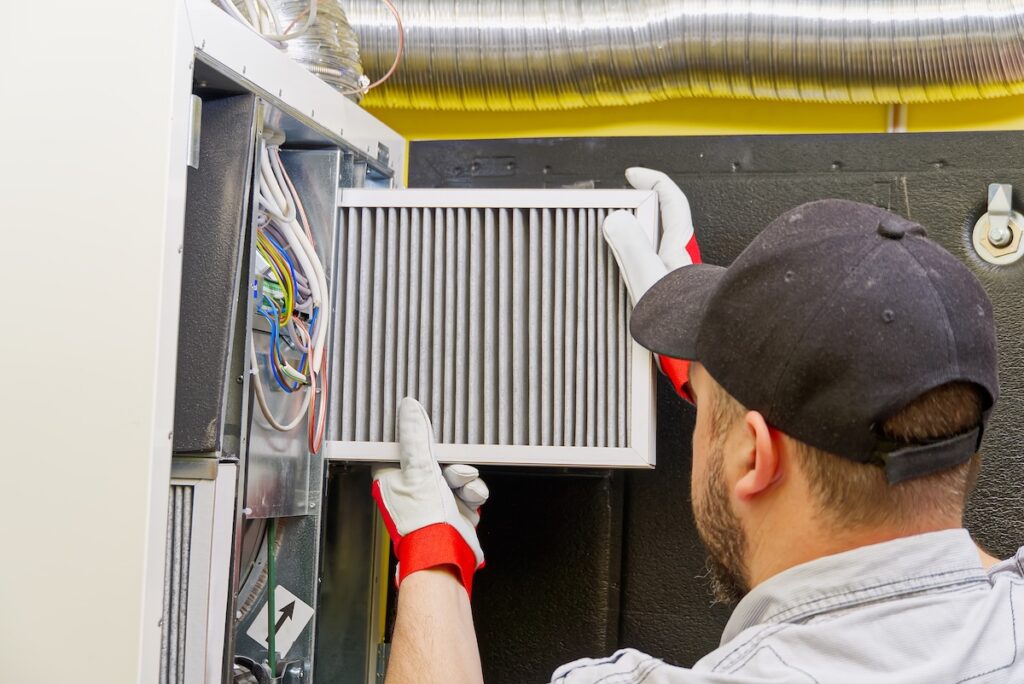
Your air conditioner filter does two jobs. It protects your HVAC system’s internal components from dust, debris, and airborne particles, and it contributes to the quality of the air circulating through your home. When the filter gets clogged, both jobs suffer. A clogged filter forces your air conditioning system to work harder to move air through the unit, which drives up energy consumption and puts stress on the blower motor, evaporator coil, and compressor. According to the U.S. Department of Energy, a clogged air filter can cause an HVAC system to use up to 15% more energy, a cost that adds up quickly over a long South Carolina cooling season.
Beyond energy waste, a severely restricted filter can cause the evaporator coil to freeze, lead to uneven cooling throughout the home, and shorten the overall lifespan of your cooling system. None of those outcomes are inevitable, and regular filter maintenance is the simplest way to avoid all of them.
Reusable vs. Disposable Filters: Know What You Have
Before cleaning anything, you need to identify what type of filter your AC unit uses. This distinction matters more than most homeowners realize. Cleaning a disposable filter does more harm than good, as the process damages the filter materials and reduces their ability to capture particles effectively. Knowing which type you have before you start saves time and prevents you from accidentally making the situation worse.
- Disposable filters: Usually made of fiberglass or pleated paper filter materials, these are designed for single use and should be replaced, not cleaned. They typically have a cardboard frame and feel flimsy when you hold them up to the light.
- Reusable or washable filters: Made with a more rigid frame and durable mesh or foam filter materials, these are designed to be rinsed, dried, and reinstalled. They often have a metal or heavy plastic frame and feel more substantial than disposable filters.
- When in doubt: Check your system’s owner manual or look for labeling on the filter frame. If you cannot confirm it is reusable, replace it rather than risk damaging it.
8 Tips to Clean Your AC Filter and Maximize Performance
Consistent filter maintenance is one of the highest-return habits a homeowner can build. These eight tips cover the full process from start to finish, including the steps most guides skip that actually make the biggest difference in how well your air conditioning system performs between professional service visits.
1. Turn Off Your System Before You Start
This one sounds obvious but gets skipped more often than you would think. Pulling a filter out of a running HVAC system allows unfiltered air and loose dust to get pulled directly into the blower and evaporator coil, which defeats the entire purpose of the maintenance. Turn the air conditioning system off at the thermostat and give it a moment to fully shut down before opening the filter compartment.
- Turn off at the thermostat: Do not just flip the fan off. Make sure the system is fully powered down before removing the air conditioner filter.
- Locate the filter compartment: Most return air grilles are on a wall or ceiling, or the filter slots directly into the air handler unit. Check both locations if you are unsure.
- Note the airflow direction arrow: Reusable filters have a directional arrow on the frame. Take a photo before removing it so you reinstall it correctly.
2. Remove and Inspect the Filter Carefully
Once the system is off, slide the filter out slowly to avoid knocking loose dust back into the return air duct. Take it outside or over a trash bag before shaking or tapping it, and do a quick visual inspection before deciding whether to clean or replace it. What you see on the filter surface tells you a lot about how your cooling system has been operating.
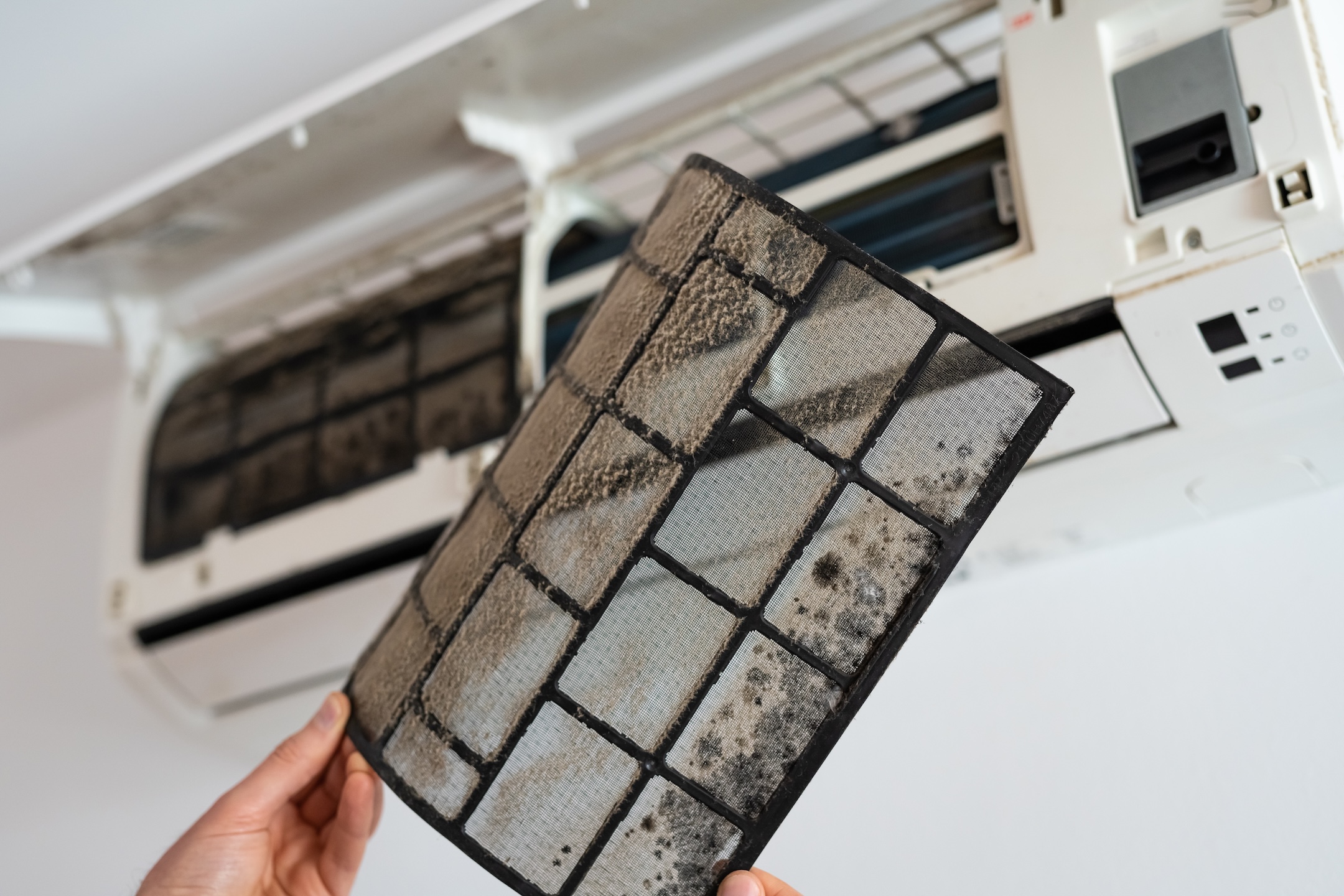
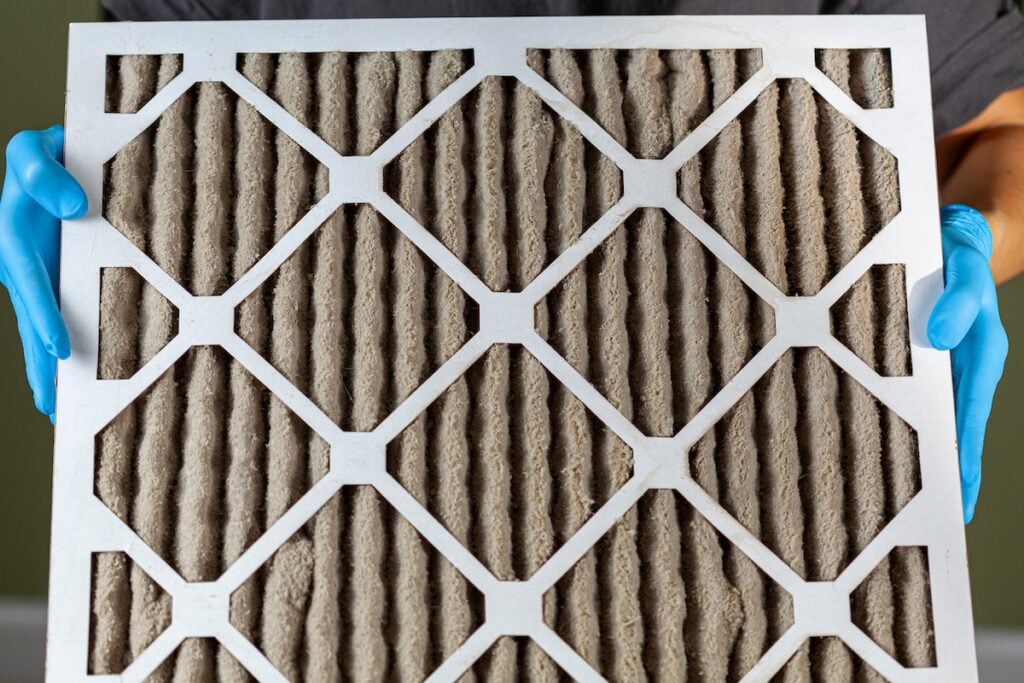
- Heavy grey or black buildup: A thick layer of compacted dust means the filter has been working hard. Reusable filters this dirty are worth a deep cleaning; disposable ones should be replaced immediately.
- Visible damage or bent frames: A filter with bent, torn, or compressed filter materials should be replaced regardless of type, as gaps allow unfiltered air to bypass it entirely.
- Mold or moisture: Any sign of mold or dampness on the air conditioner filter is a signal that something else in the cooling system needs attention, and is worth a call to an HVAC professional.
3. Vacuum Loose Dust Before Wetting the Filter
Before introducing any water, use a vacuum with a brush attachment to pull loose dust off the surface of the filter. This step dramatically improves the effectiveness of the rinse that follows and prevents loose debris from turning into a muddy paste that embeds deeper into the filter materials. It takes about two minutes and makes a noticeable difference in how clean the filter ends up.
- Use a brush attachment on low suction: High suction can damage delicate filter materials, especially on thinner reusable filters.
- Work from the clean side outward: Vacuum in the direction that pulls debris away from the media rather than pushing it in deeper.
- Do this outside: Loose dust dislodged from a heavily loaded air conditioner filter can quickly cloud a room if you do it indoors.
4. Rinse With Gentle Water Pressure
With loose dust removed, rinse the filter using a garden hose or sink sprayer on a low-pressure setting. The goal is to flush debris through the filter materials without bending the frame or collapsing the media. Always rinse from the clean side to the dirty side so water is carrying debris out rather than pushing it deeper in.
- Low pressure only: High-pressure water can permanently damage filter materials, particularly foam or fiberglass mesh reusable filters.
- Rinse until water runs clear: Keep rinsing until no visible debris is coming out the other side. Cloudy or grey water means there is still buildup to remove.
- Avoid hot water: Warm or cool water works best. Hot water can warp some filter frames and degrade certain filter materials over time.
5. Deep Clean Heavily Soiled Filters
For air conditioner filters that have gone longer than recommended between cleanings, a rinse alone may not be enough. A deep cleaning with a mild soap solution is the right approach when the filter still looks dingy after a thorough rinse, or when visible grime remains in the filter materials after vacuuming and rinsing.
- Mix mild dish soap with warm water: A small amount of soap in a bucket or spray bottle is all you need for most deep cleaning situations.
- Use a soft brush attachment: A gentle scrubbing motion with a soft brush attachment works through the filter materials without tearing them. Avoid stiff brushes that can damage the media.
- Rinse completely: After a deep cleaning with soap, rinse the filter thoroughly until no suds remain. Soap residue left in the filter materials can attract dust faster and may affect airflow.
6. Let the Filter Dry Completely Before Reinstalling
This is the step most homeowners rush, and it is one of the most important. Reinstalling a damp air conditioner filter creates ideal conditions for mold and mildew growth inside the filter and on the evaporator coil. It can also cause the filter materials to sag, creating gaps that allow unfiltered air to pass through the HVAC system.
- Air dry fully: Lay the filter flat or prop it at an angle in a well-ventilated area. In Easley, SC, a warm dry day makes outdoor drying quick and easy, but allow at least a few hours regardless of conditions.
- Never use heat to speed drying: Hair dryers or direct sunlight can warp the filter frame or degrade the filter materials on some filter types.
- Check before reinstalling: Run your hand across the filter surface. If any area feels cool or damp, it is not ready to go back into your AC unit.
7. Reinstall Correctly and Check Airflow
Once the filter is fully dry, reinstall it with the airflow direction arrow pointing toward the blower, not toward the return air duct. A backwards filter is nearly as problematic as no filter at all, as it creates pressure issues throughout the air conditioning system and reduces how effectively the filter materials capture particles.
- Match the arrow to the direction of airflow: The arrow should point away from the return air grille and toward the HVAC system’s blower.
- Seat the filter firmly: Make sure all edges are fully seated in the frame with no gaps around the perimeter where unfiltered air could bypass the filter materials.
- Run the system and check vents: After restarting, hold your hand near a supply vent to confirm airflow feels strong and consistent. Weak airflow after a deep cleaning often means the filter was not fully dry or was not seated correctly in the AC unit.
8. Set a Cleaning and Replacement Schedule
Cleaning your air conditioner filter once and forgetting about it is not a maintenance plan. Setting a consistent schedule is what actually delivers long-term benefits to your cooling system’s airflow, efficiency, and lifespan. We are proud to serve home and business owners in Easley, SC, and nearby communities with AC filter replacement, maintenance services, and more.
- Reusable filters: Clean every 30 to 60 days during heavy use seasons, and inspect monthly to catch loose dust buildup early before it becomes a deep cleaning job.
- Disposable filters: Replace every 1 to 3 months depending on household factors like pets, allergies, and how often the air conditioning system runs.
- Homes with pets or allergy sufferers: Lean toward the shorter end of any replacement interval, as pet dander and allergens load filter materials faster than in homes without these factors.
- Set a phone reminder: A simple monthly calendar reminder takes the guesswork out of HVAC system filter maintenance entirely.
How Dirty vs. Clean Filters Compare
The difference between a clean and a clogged filter is not just a matter of appearance. It affects every aspect of how your air conditioning system operates, from the air quality in your home to the long-term health of expensive components like the compressor and blower motor. This table summarizes what is at stake.
| Factor | Clean Filter | Dirty or Clogged Filter |
| Airflow | Strong, consistent | Restricted, weak |
| Energy consumption | At rated efficiency | Up to 15% higher |
| Indoor air quality | Particles captured effectively | Dust and debris recirculate |
| System strain | Normal operating load | Blower and compressor overworked |
| Equipment lifespan | Maximized | Shortened by unnecessary wear |
Frequently Asked Questions About AC Filter Cleaning
Most homeowners have a few recurring questions about filter maintenance, and the answers often clear up habits that have been costing them money without realizing it. Here are the ones we hear most often from homeowners across the Upstate.
Can I clean a disposable AC filter instead of replacing it?
No. Disposable filters are made of filter materials that degrade when wet and cannot be effectively restored by cleaning. Attempting to wash a disposable air conditioner filter typically damages the media and creates gaps that allow unfiltered air to pass through the HVAC system. When a disposable filter is dirty, replace it.
How do I know if my AC filter is causing airflow problems?
The most common signs are weak airflow from supply vents, rooms that take longer than usual to cool, a cooling system that runs continuously without reaching the set temperature, and higher than normal energy bills. A visual check of the air conditioner filter is always the first step when any of these symptoms appear.
What MERV rating should I use for my home?
Most residential HVAC systems perform well with a MERV 8 to 11 filter, which captures the majority of common household particles without restricting airflow. Higher MERV ratings capture smaller particles but can restrict airflow in AC units not designed to handle them. An HVAC technician can recommend the right rating for your specific equipment.
Is filter maintenance enough, or does my cooling system need professional service too?
Filter maintenance is one part of a complete maintenance routine, but it does not replace professional service. An annual tune-up by a licensed technician covers the components filter cleaning cannot address, including the evaporator coil, refrigerant levels, electrical connections, and overall air conditioning system performance.
Keep Your System Running Strong With Eastergard HVAC

A clean air conditioner filter is the foundation of a well-maintained AC unit, but it is just one piece of the picture. If your cooling system is showing signs of reduced performance even with a clean filter, or if you are overdue for a professional tune-up, Eastergard HVAC has been helping Greenville area homeowners stay comfortable and efficient since 1989.
Contact Eastergard HVAC today to schedule your service visit. Call or text us at 864-235-2935 or send us an email, and we will make sure your HVAC system is ready to handle whatever the season brings.
Recent Articles POSTS