Why is My Thermostat Not Working? 7 Common Reasons It’s Malfunctioning
If your home is not reaching the temperature you set or the system is not responding at all, a thermostat issue is often where the answer starts. Why is my thermostat not working is one of the most common questions homeowners ask before calling for HVAC service, and in many cases the fix is simpler than you might expect. This guide walks through the seven most common reasons a thermostat malfunctions, what to check yourself, and when the problem points to something that needs a professional.
Here is what we will cover:
- Simple fixes to check first: Settings, power, and location issues that are easy to miss.
- 7 common reasons your thermostat is malfunctioning: What is actually causing the problem.
- When thermostat issues are not the real problem: Signs the fault lies with the HVAC system itself.
- Repair vs. replacement: How to know when it is time for a new thermostat.
Check These Simple Things Before Diagnosing Further
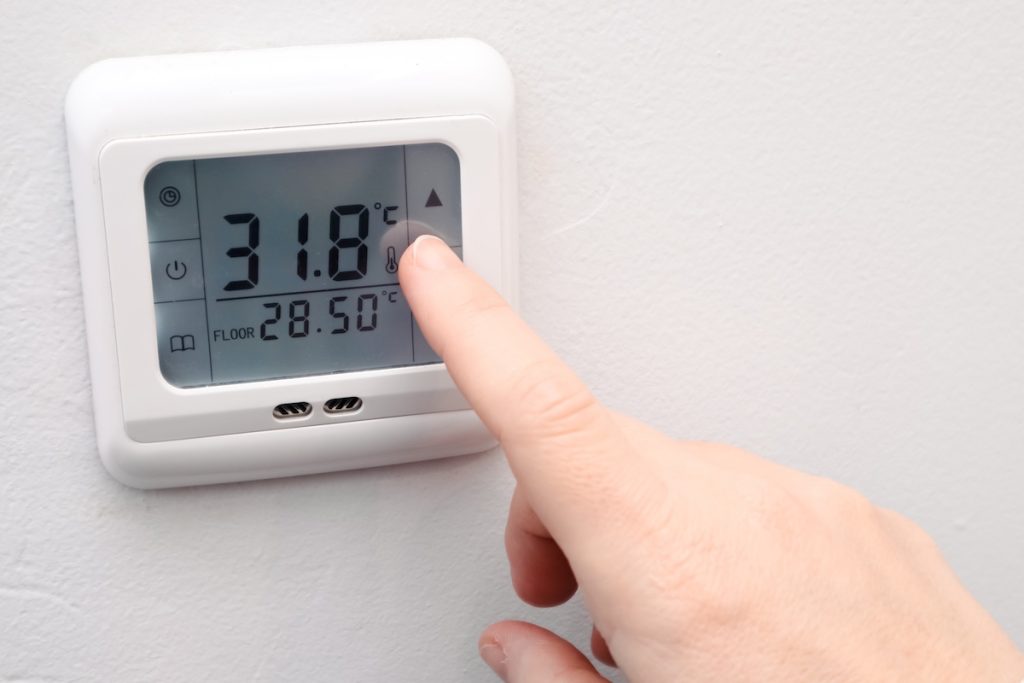
Before going through the full list of possible causes, a few quick checks can rule out the most common culprits. These take under two minutes and save time if the issue turns out to be straightforward.
- Check the thermostat setting: Confirm it is set to HEAT or COOL as appropriate, that the fan is set to AUTO rather than ON, and that the set temperature is actually higher or lower than the current room temperature.
- Check the circuit breaker: A tripped breaker will cut power to both the thermostat and the air conditioning or heating system. Check the panel and reset any tripped breakers before proceeding.
- Check the clogged air filter: A severely clogged air filter can cause the system to shut down on a safety limit even when the thermostat is functioning correctly. Replace it if it has not been changed recently.
- Check the air handler power switch: Many air handlers and furnaces have a dedicated power switch on or near the unit. Confirm it is in the ON position.
7 Common Reasons Your Thermostat Is Malfunctioning
If the simple checks above did not resolve the issue, one of these seven causes is likely at the root of the problem. Some are DIY-friendly, others warrant a call to a licensed HVAC technician.
1. Dead Batteries
Dead batteries are the single most common reason a thermostat stops responding and the easiest to fix. When batteries die completely, the thermostat screen may go blank, fail to send signals to the air conditioning or heating system, or display erratic readings. Replace with fresh batteries and wait a moment for the thermostat to reboot. If the thermostat screen comes back and the system responds normally, dead batteries were the issue.
- Blank or dim thermostat screen: The most obvious indicator of dead or dying batteries on a battery-powered unit.
- Thermostat powers on but system does not respond: Weak batteries may give the thermostat screen enough power to display but not enough to send control signals to the equipment.
- Prevention: Replace batteries every 12 months, ideally in spring before the cooling season begins.
2. Incorrect Settings or Programming
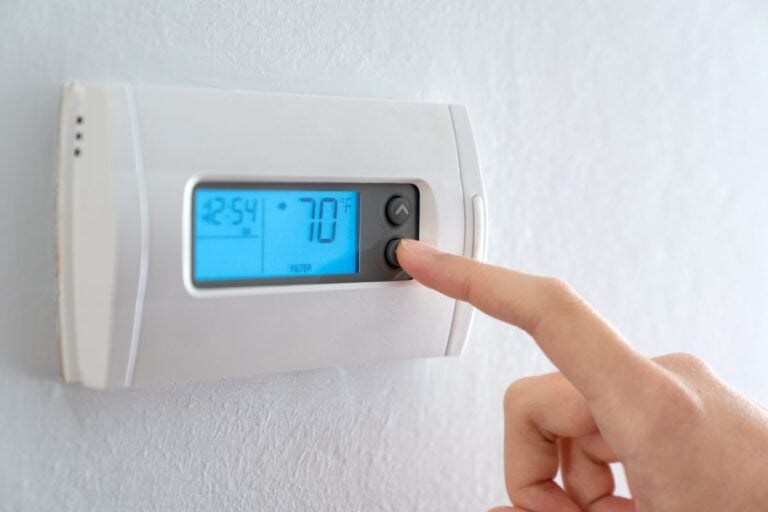
Thermostat issues are often a programming problem rather than a hardware failure. This is especially common after a power outage, when many programmable thermostat models reset to factory defaults, and with complex schedules that may no longer reflect the household’s routine. Check that the mode is correct, that the set temperature makes sense relative to the current room temperature, and that the current time and day are set correctly on any programmable thermostat.
- System runs at unexpected times: Often points to a programmed schedule that no longer reflects your routine.
- After a power outage: Many programmable thermostat models reset to default settings when power is interrupted.
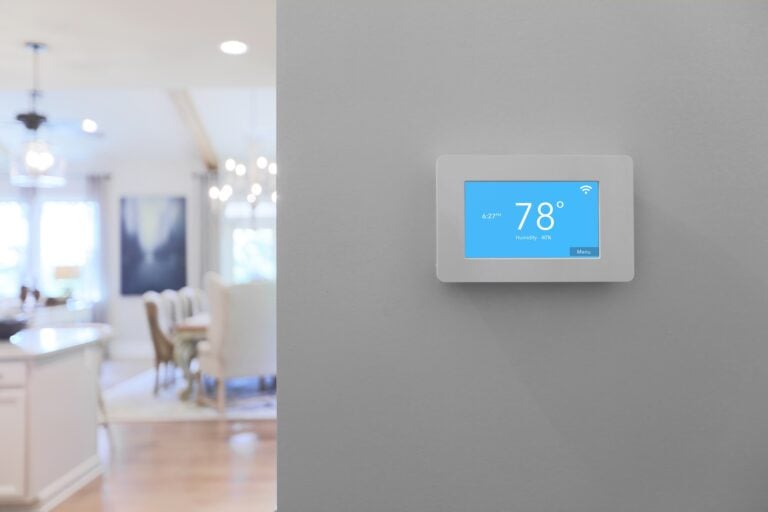
- Smart thermostats: Confirm the Wi-Fi connection is active, as some smart thermostats lose schedules or features when disconnected from the network.
3. Thermostat Placement Issues
A thermostat in the wrong location gives inaccurate temperature readings and causes the system to behave erratically, even when the thermostat itself is functioning perfectly. This is one of the most overlooked thermostat issues in Upstate South Carolina homes, where afternoon sun angles shift significantly with the seasons.
- Direct sunlight: Causes the thermostat to read higher than the actual room temperature, making air conditioning run longer than necessary.
- Near heat sources: Lamps, appliances, or heating vents near the thermostat produce falsely high readings.
- Near drafts or exterior walls: Can cause the thermostat to read lower than the actual temperature, running the heating system longer than needed.
4. Dirty Internal Components
Older mechanical and early digital thermostats can accumulate dust on internal sensors and contact points over time, causing inaccurate temperature sensing or preventing clean electrical connections. Turning off power to the thermostat, removing the cover, and gently cleaning the interior with a soft brush or compressed air can resolve thermostat issues in older units without requiring full replacement.
- Older mechanical thermostats: Most susceptible to dust-related calibration issues.
- Symptoms: Short cycling, longer-than-expected run times, or failure to respond at the expected temperature.
- When cleaning helps: On units less than 10 years old in otherwise good condition, cleaning can restore accurate function.
5. Loose or Corroded Wiring
Thermostat issues caused by wiring are more common than most homeowners expect. Low-voltage connections can loosen over time, particularly in homes where the thermostat has been removed for painting or other work. Corroded terminals are also common in older homes or humid climates. We are proud to serve home and business owners in Greer, SC, and nearby communities with thermostat installation, HVAC service, and more.
- Thermostat powers on but system does not start: A loose wire prevents the signal from reaching the air conditioning or heating equipment.
- Intermittent operation: A connection that is almost fully seated may work sometimes and fail others.
- When to call a professional: Corroded, burned, or previously modified wiring should be inspected by a licensed technician before any repair.
6. Tripped Safety Limit or System Lockout
Sometimes thermostat issues are not really thermostat problems at all. High-limit switches in furnaces, float switches in condensate pans, and refrigerant pressure switches in air conditioning systems can all shut the system down and prevent the thermostat from activating it, even when it is sending the correct signal. The thermostat screen and settings look normal, but the system simply will not respond.
- Furnace high-limit switch: Trips when the furnace overheats, often due to a clogged air filter. Replacing the clogged air filter and allowing the system to cool may reset it.
- Condensate float switch: Trips when the drain pan fills with water. Clearing the drain line typically resolves this.
- Refrigerant pressure switch: Indicates a refrigerant issue that requires a licensed technician.
7. Failed Thermostat Hardware
After ruling out all other causes, the thermostat itself may have simply reached the end of its useful life. Most thermostats last 10 to 20 years. A thermostat that is cracked, has a consistently unresponsive thermostat screen, or produces readings that are clearly inaccurate even after cleaning and battery replacement is likely ready for replacement. ENERGY STAR confirms that ENERGY STAR certified smart thermostats save an average of 8% on heating and cooling bills based on real-world field data from homes across the United States, meaning a failed thermostat replaced with a smart model pays for itself over time.
- Consistent inaccuracy: A thermostat reading five or more degrees off from a separate thermometer placed nearby likely has a failed sensor.
- Unresponsive thermostat screen: Buttons or touchscreen that do not respond consistently indicate hardware failure.
- Age: A thermostat over 15 years old showing any of the above symptoms is almost always better replaced than repaired.

When Thermostat Issues Are Not the Problem
If the thermostat checks out but the system still is not performing correctly, the fault may be in the HVAC equipment itself.
| Symptom | More Likely Cause |
| Air conditioning runs but does not cool adequately | Low refrigerant or dirty evaporator coil |
| System short-cycles despite correct settings | Oversized equipment or clogged air filter |
| Uneven temperatures between rooms | Ductwork leaks or imbalanced airflow |
| System makes unusual noises | Mechanical issue in air handler or outdoor unit |
| Higher energy bills despite correct settings | Dirty coils, low refrigerant, or aging equipment |
Frequently Asked Questions About Thermostat Issues
How do I know if my thermostat is reading temperature accurately?
Place a separate thermometer at the same height as the thermostat and wait 15 minutes. A difference of more than two degrees suggests the thermostat sensor may be inaccurate, dirty, or affected by its location.
Can I replace a thermostat myself?
Replacing a basic thermostat with a similar model is manageable for most homeowners. Smart thermostat installation can be more complex, particularly in homes without a C-wire or in systems with heat pumps or multi-stage air conditioning equipment. Professional installation ensures correct wiring and full compatibility.
Is a smart thermostat worth it when replacing a failed unit?
In most cases, yes. The energy savings from a properly functioning smart thermostat, combined with the convenience of remote access and automated scheduling, make it a meaningful upgrade over a basic replacement. Eastergard HVAC can help you choose a model that is fully compatible with your existing equipment.
Thermostat Troubleshooting and Upgrades From Eastergard HVAC
Thermostat issues are some of the most straightforward HVAC problems to diagnose and resolve when you know what to look for. Eastergard HVAC has been helping Greenville area homeowners stay comfortable since 1989, and our licensed technicians handle everything from thermostat diagnostics and wiring repairs to full smart thermostat installations.
Contact Eastergard HVAC today to schedule your service visit. Call or text us at 864-235-2935 or send us an email, and we will get your thermostat and your comfort back on track.
Recent Articles POSTS