What Is a Good SEER Rating for Your AC or Heat Pump?
If you are comparing quotes for a new air conditioner or heat pump, the efficiency rating on each one is usually the hardest number to make sense of. What is a good SEER rating is one of the most common questions Upstate South Carolina homeowners ask during a replacement, and the right answer depends on your home, your budget, and how long you plan to stay. This guide explains what SEER2 measures, where the federal minimums sit in South Carolina, and how to choose the efficiency level that actually pays off for your household.
Here is what we will cover:
- What SEER and SEER2 mean: How the rating works and why the numbers changed in 2023.
- Minimum SEER2 requirements in South Carolina: The baseline every new system must meet.
- What counts as a good SEER2 rating: Efficiency tiers from entry level to premium.
- 5 factors that determine the right rating: The variables that matter more than the number alone.
- How heat pump ratings differ: Why HSPF2 matters alongside SEER2.
What SEER and SEER2 Actually Measure
SEER stands for Seasonal Energy Efficiency Ratio. It measures how much cooling a system delivers over a typical cooling season compared to the electricity it uses, so a higher number means more cooling for every dollar spent on power. It works much like miles per gallon for your air conditioner or heat pump.
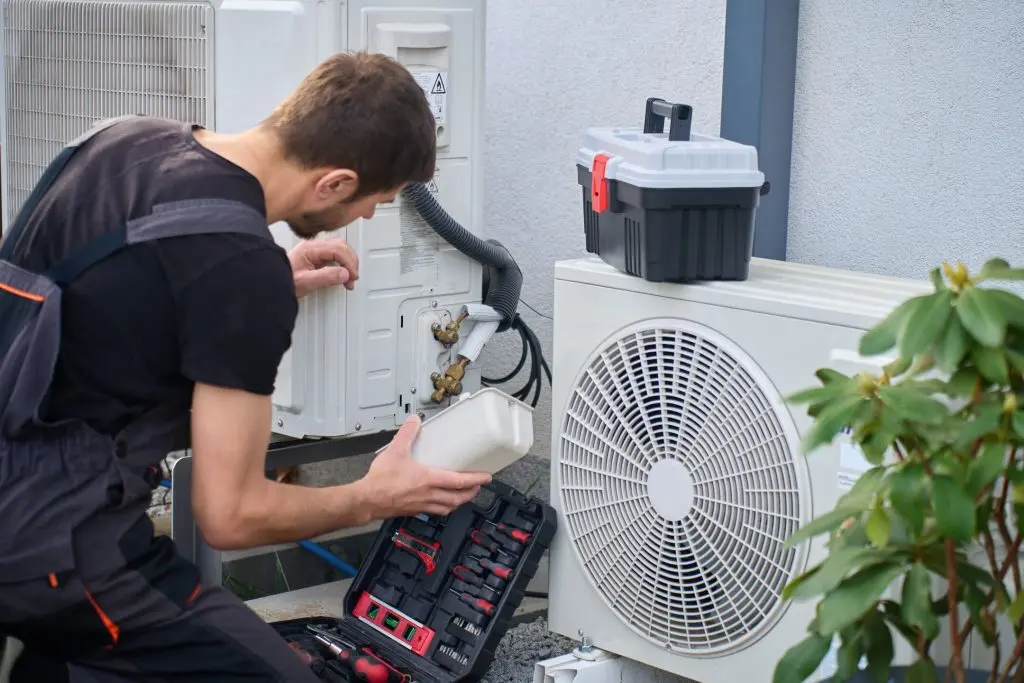
On January 1, 2023, the Department of Energy replaced SEER with SEER2. The updated test uses higher external static pressure to better reflect how systems perform when connected to real ductwork in real homes. Because the test is tougher, SEER2 numbers run slightly lower than SEER numbers for the same equipment. A system rated 15 SEER under the old test is roughly 14.3 SEER2 under the new one, so an older SEER rating and a new SEER2 rating are not a direct comparison.
Minimum SEER2 Requirements in South Carolina
South Carolina falls in the Department of Energy’s Southeast region, which has stricter cooling standards than northern states because air conditioners run for so much of the year here. Every new system installed in the Upstate must meet these minimums.
- Split system air conditioners under 45,000 BTU: 14.3 SEER2 minimum.
- Split system air conditioners 45,000 BTU and above: 13.8 SEER2 minimum.
- Split system heat pumps: 14.3 SEER2 and 7.5 HSPF2 minimum nationwide.
According to AHRI, the Southeast minimum for split-system air conditioners under 45,000 BTU rose to 14.3 SEER2, the equivalent of 15 SEER in 2023. That means any new system you are quoted today already outperforms most equipment installed before that change.
What Is a Good SEER Rating? Efficiency Tiers Explained
Meeting the minimum is the floor, not the goal. For most Upstate homeowners, a good SEER2 rating falls between 15 and 18, with premium variable speed systems reaching into the 20s.
| SEER2 Range | Efficiency Level | Typical Compressor | Best For |
| 13.8 to 14.3 | Federal minimum | Single stage | Short-term ownership or tight budgets |
| 15 to 16 | Good | Single stage or two stage | Most homeowners balancing cost and efficiency |
| 17 to 19 | Better | Multi-Speed | Long-term homeowners and humid climates |
| 20 and above | Best | Variable speed | Maximum efficiency, comfort, and humidity control |
The jump from the minimum to the good tier delivers meaningful savings for most South Carolina homes. Beyond that, each additional SEER2 point still lowers energy use, but the return depends heavily on the factors below.
5 Factors That Determine the Right SEER Rating for Your Home
The best SEER2 rating for one home is not always the best for another. These five factors should guide the decision more than the number on the yellow EnergyGuide label.
1. How Long You Plan to Stay in the Home
Higher efficiency systems cost more upfront, and the lower utility bills pay that difference back over time. If you plan to stay ten years or longer, a higher-tier system has time to earn back its premium. If you expect to move within a few years, a system closer to the minimum may make more financial sense.
- Staying long term: A 17 SEER2 or higher system gives the energy savings enough years to add up.
- Selling soon: A good-tier system around 15 to 16 SEER2 delivers solid efficiency without overspending on savings you will not see.
2. How Hard Your System Works in the Upstate Climate
Upstate summers are long, hot, and humid, and most homes run air conditioning for six or more months a year. The more hours a system runs, the more each SEER2 point is worth on your monthly bill. Homes with large sun-exposed windows, high ceilings, or bonus rooms over garages put even more load on the system and see a faster return from higher efficiency.
3. Humidity Control and Comfort
Higher SEER2 ratings usually come with two-stage or variable speed compressors, and that equipment changes how a system feels, not just what it costs to run. Variable speed systems run at a lower speed for longer periods, keeping temperatures steady while using less energy. They also regulate humidity better, because lower fan speeds allow greater humidity control.
- Single stage: Runs at full capacity and shuts off, which can leave the air feeling clammy on humid days.
- Two-stage: Runs at a lower setting most of the time and ramps up on the hottest afternoons.
- Variable speed: Adjusts output in small increments for the most consistent temperatures and the best moisture removal.
4. Your Existing Ductwork and Proper Sizing
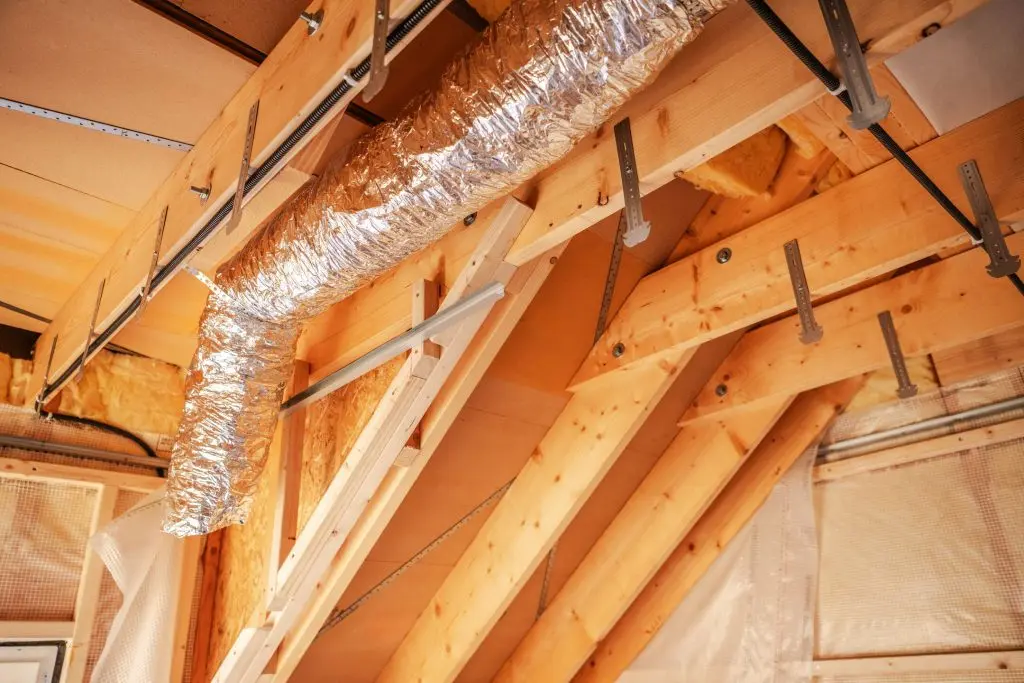
A high SEER2 rating only reaches its potential when the system is properly sized and the existing ductwork is in good condition. Leaky or undersized ducts lose conditioned air before it reaches your rooms, and an oversized system short cycles without ever running long enough to perform at its rated efficiency. Ductwork that is older than 15 to 25 years or runs through an unconditioned attic or crawl space is worth evaluating before you invest in premium equipment.
- Load calculation: A Manual J calculation confirms the right capacity for your home before any equipment is recommended.
- Duct evaluation: A home solutions advisor will evaluate your existing ductwork and equipment so the efficiency you pay for is the efficiency you get.
5. Your Budget and Available Rebates
A new HVAC system typically ranges from $7,500 to $20,000 depending on equipment type, efficiency tier, and installation complexity. Higher efficiency equipment sits toward the upper end of that range, but rebates can narrow the gap. Duke Energy periodically offers rebates for qualifying high-efficiency heat pump and air conditioner installations, and Eastergard HVAC will help you identify which systems qualify and how to submit the paperwork.
How Heat Pump Efficiency Ratings Differ
Because a heat pump both heats and cools, it carries two efficiency ratings instead of one. SEER2 measures cooling efficiency, and HSPF2 (Heating Seasonal Performance Factor) measures heating efficiency, with a federal minimum of 7.5 HSPF2 for split system heat pumps.
HSPF2 matters in the Upstate because heat pumps carry the full heating load for most of the winter. When temperatures drop or the system enters defrost mode, a heat pump uses electric heat strips for supplemental heat, which cost more to run. A higher HSPF2 rating and a variable speed or cold climate model reduce how often those heat strips engage. For homes with gas service, a dual fuel system pairs a heat pump with a gas furnace backup for the coldest days. The AHRI efficiency guide is a useful reference for comparing air conditioner and heat pump ratings side by side.
- SEER2: Cooling efficiency across a full season.
- EER2: Cooling efficiency at a fixed peak temperature, which shows how a system holds up on the hottest days.
- HSPF2: Heating efficiency across a full heating season.
American Standard Efficiency Options
As an American Standard Platinum Dealer, Eastergard HVAC installs systems across all three of the brand’s efficiency tiers. Each tier lines up with a different spot on the SEER2 scale, which makes it easier to match equipment to your goals.
- Silver Series: Up to 15.2 SEER2 with a single stage compressor, a solid fit for budget-conscious homeowners.
- Gold Series: Up to 17.2 SEER2 with a two stage compressor, the strongest middle ground for most Upstate homes.
- Platinum Series: Up to 23.6 SEER2 with AccuComfort variable speed technology for maximum efficiency and humidity control.
We are proud to serve home and business owners in Taylors, SC, and nearby communities with AC installation, heat pump installation, and more.
Frequently Asked Questions About SEER Ratings
These are the questions we hear most often from Upstate homeowners comparing efficiency ratings on a new system. If your situation is not covered here, our team is happy to walk you through it.
Is a higher SEER rating always better?
A higher SEER2 rating always means lower energy use, but it is not always the best financial choice. The right rating depends on how long you plan to stay, how hard your system works, and whether your ductwork can support the equipment’s rated performance.
Is 16 SEER2 good for South Carolina?
Yes. A 16 SEER2 system sits comfortably above the Southeast minimum and delivers meaningful savings for most Upstate homes. Homeowners who plan to stay long term or want better humidity control often step up to a two stage or variable speed system in the 17 SEER2 and higher range.
Should I replace an older low-SEER system that still runs?
It depends on age and condition. Air conditioners typically last 12 to 15 years, and systems from that era may also use R-22, which was phased out of production in 2020, or R-410A, which was phased out in 2025 in favor of R-454B. Not every system is worth repairing, and an aging low-efficiency unit facing a major repair is often a strong replacement candidate.
Where can I find my system’s SEER rating?
Check the yellow EnergyGuide label on the outdoor unit or look up the model number from the data plate. Systems installed before 2023 will show a SEER rating, while newer systems show SEER2.
Find the Right Efficiency Level With Eastergard HVAC
Choosing a SEER2 rating is easier when someone has actually looked at your home, your ductwork, and how your household uses its system. Eastergard HVAC has been helping Greenville area homeowners make this decision since 1989, and our team will lay out your options across every efficiency tier with straight answers and honest pricing.
Contact Eastergard HVAC today to schedule your free replacement quote. Call or text us at 864-235-2935 or email us at info@eastergard.com, and we will help you find the efficiency level that fits your home and budget.
Recent Articles POSTS