Ductless Heat Pump Installation: 8 Benefits for Older Homes
If you have been looking for a smarter way to heat and cool an older home, a ductless mini split system deserves a serious look. Ductless heat pump installation is one of the most practical upgrades available to homeowners whose houses were built without central ductwork, or where adding ducts would be expensive, invasive, or simply not worth it. This guide covers the eight most meaningful benefits a ductless heat pump brings to an older home and why so many Upstate South Carolina homeowners are choosing this approach over traditional forced-air systems.
Here is what we will cover:
- How ductless heat pumps work: What makes them different from traditional systems.
- Why older homes are ideal candidates: The specific challenges a ductless mini split solves.
- 8 key benefits: The practical advantages that matter most for older home applications.
- What installation looks like: What to expect from the process including timeline and cost.
- How Eastergard HVAC can help: Our experience installing Mitsubishi ductless systems throughout the Upstate.
How a Ductless Mini Split Heat Pump Works in an Older Home
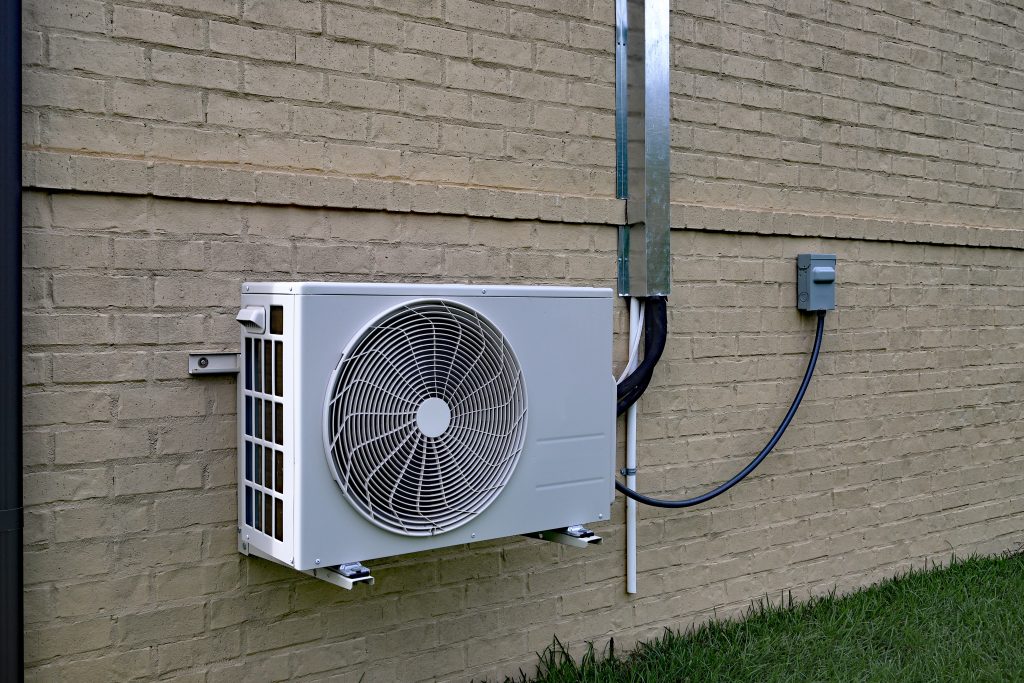
A ductless mini split system consists of two primary components: a compact outdoor unit and one or more indoor units mounted on walls or ceilings inside the home. The indoor and outdoor units are connected by a small conduit containing refrigerant lines, a power cable, and a condensate drain line. That conduit passes through a hole in the exterior wall roughly three inches in diameter, which is the only structural modification required to install a mini split.
In heating mode, the mini split heat pump extracts heat from outdoor air and moves it inside. Modern ductless heat pumps can maintain effective heating output at outdoor temperatures as low as -15°F, which goes well beyond anything South Carolina winters typically demand. In cooling mode, it reverses the process, removing heat from the indoor air and releasing it outside. Because ductless heat pumps transfer heat rather than generate it, they operate with a level of energy efficiency that traditional electric resistance heating and even many gas furnaces cannot match. ENERGY STAR notes that ductless mini split heat pumps are specifically designed for homes without ductwork and can lower energy bills by switching from electric resistance, propane, and oil heating to heat pumps, with no combustion and no direct emissions, making them one of the most energy efficient and practical upgrades available for older homes that have relied on costly electric baseboard or window unit systems.
8 Benefits of Ductless Heat Pump Installation for Older Homes
These eight benefits address the specific challenges older homes present when it comes to heating and cooling. For most homes built before the 1980s, the majority of these advantages are directly relevant.
1. No Ductwork Required
The most significant benefit for older homes is the elimination of ductwork entirely. Homes built before central air conditioning became standard were not designed with duct runs in mind. Retrofitting a traditional forced-air system into an older home typically requires cutting through walls, ceilings, and floors and losing closet or attic space to accommodate the system. A ductless mini split installation bypasses all of that. The only penetration required is the small conduit hole through the exterior wall connecting the indoor and outdoor units.
- No structural disruption: Original plaster walls, hardwood floors, and historic trim remain completely intact during and after installation.
- No mechanical room required: Ductless mini split systems do not need a central air handler cabinet, which frees up utility space that older homes often have very little of.
- Fast installation: A single-zone mini split installation typically takes 4 to 8 hours, compared to the multi-day process of retrofitting full ductwork.
2. Eliminates Energy Loss From Duct Leakage
Homes that do have some existing ductwork, often added piecemeal over decades, frequently suffer from significant duct leakage. Ducts routed through unconditioned attics and crawl spaces lose heat in winter and gain heat in summer. A ductless mini split delivers conditioned air directly into the room through the indoor unit, with no duct runs to leak.
- Direct delivery: Refrigerant carries energy from the outdoor unit to the indoor unit through sealed copper lines with virtually no energy loss in transit.
- No attic or crawl space losses: Traditional systems lose 20 to 30 percent of their heating or cooling capacity before it reaches the living area. A ductless mini split system loses none.
- Consistent room temperatures: Because air is delivered directly into the space, ductless mini splits maintain more even temperatures throughout the room than forced-air registers.
3. Zoned Comfort Control With Multiple Indoor Units
Older homes frequently have comfort problems that no thermostat adjustment resolves. A room over a garage that is always cold in winter. A south-facing bedroom that overheats in summer. A sunroom the main system barely reaches. Ductless heat pump installation addresses these directly by allowing independent temperature control in each zone served by its own indoor unit. A single outdoor unit can connect up to eight indoor units, allowing a whole-home ductless mini split solution with zone-by-zone control without the energy waste of conditioning unused spaces.
- Each zone is independent: Multiple indoor units can be set to different temperatures simultaneously, controlled separately by each occupant.
- Multi-zone systems: While a single outdoor unit can connect up to eight indoor units, multi-zone systems cost significantly more than single-zone systems. Ductless heat pump installation costs range from $5,000 to $20,000 depending on the number of zones, equipment tier, and installation complexity. Proper sizing of each indoor unit is also essential, since an incorrectly sized unit will short cycle and wear out prematurely just like any oversized HVAC system.
- Solves chronic problem rooms: A single mini split targeted at a consistently uncomfortable space is often the most cost-effective solution, supplementing an existing system rather than replacing it entirely.
4. Preserves Historic and Aesthetic Character
Many older homes have architectural details and original materials that homeowners are reluctant to disturb. Retrofitting traditional ductwork requires cutting through original plaster, installing visible registers, and routing bulkheads through finished spaces. Installing a mini split preserves all of that. We are proud to serve home and business owners in Greer, SC, and nearby communities with ductless heat pump installation, mini split services, and more.
- No visible ductwork or bulkheads: The only visible interior component is the slim wall-mounted indoor unit, far less intrusive than the dropped ceilings or exposed ducts that ductwork retrofits require.
- Minimal wall penetration: The three-inch conduit hole is located high on an exterior wall and covered with a small decorative cover plate on the interior.
- Original materials stay intact: Original plaster walls, beadboard ceilings, hardwood floors, and period trim remain undisturbed when you install a mini split.
5. High Energy Efficiency
Ductless mini split systems consistently deliver some of the highest energy efficiency ratings available in residential HVAC equipment. Mitsubishi ductless mini split systems, which Eastergard installs as a certified Mitsubishi Ductless Pro, achieve SEER2 ratings well above the minimum standard, translating directly into lower monthly utility bills compared to window units, electric baseboard heaters, or an aging furnace paired with a separate mini split air conditioner.
- Inverter-driven compressor: Unlike traditional single-speed systems that cycle fully on and off, the inverter-driven compressor in a mini split heat pump modulates output to match exact demand, consuming only the energy actually needed.
- Heating energy efficiency: In mild winter climates like Upstate South Carolina, a ductless heat pump delivers significantly more heat energy per unit of electricity than electric resistance heating.
- Cold climate capability: Ductless heat pumps can heat spaces at outdoor temperatures as low as -15°F, making them a reliable year-round heating solution even in regions with significantly harsher winters than Upstate South Carolina experiences.
- Year-round comfort from one system: A ductless mini split heat pump handles both heating and cooling, eliminating the need for separate window units in summer and space heaters in winter.
6. Improved Indoor Air Quality

Traditional forced-air systems circulate air through ductwork that collects dust, debris, mold, and allergens over time. Ductless mini split systems eliminate ductwork entirely, and the indoor units include multi-stage filtration that captures airborne particles directly at the point of air delivery.
- No duct contamination: Without ductwork, the air quality delivered by a ductless mini split system is not degraded in transit.
- Multi-stage filtration: Mitsubishi indoor units include washable filters and advanced filtration options that capture fine particles, allergens, and odors.
- Dehumidification capability: Many ductless heat pump models include a dedicated dehumidification mode that removes moisture from indoor air without aggressive cooling, useful in South Carolina’s humid climate.
7. Quiet Operation
Older homes tend to have thinner walls and less acoustic separation between rooms than modern construction. Window units, which many older homes have relied on for cooling, are notoriously loud. Ductless mini split indoor units operate at noise levels as low as 19 to 26 decibels. The outdoor unit noise is localized well away from sleeping areas and living spaces.
- Indoor unit noise levels: Most Mitsubishi indoor units operate at 19 to 32 decibels depending on fan speed, significantly quieter than window units or forced-air systems.
- Outdoor unit placement flexibility: The outdoor unit can be positioned away from windows, patios, or other areas where noise would be disruptive.
- No duct noise: Traditional forced-air systems produce duct expansion sounds and blower vibration. A ductless mini split system produces none of these.
8. Relatively Simple and Non-Invasive Installation
For homeowners dreading the disruption of a major renovation, ductless mini split installation is often a welcome surprise. A single-zone mini split installation typically takes 4 to 8 hours and leaves the home essentially unchanged except for the addition of the indoor and outdoor units. Installation complexity can increase ductless heat pump costs and timelines for multi-zone systems, but even those projects rarely require more than two to three days.
- Typical single-zone installation: 4 to 8 hours for a qualified installation team on a standard older home exterior wall.
- Multi-zone installations: Homes requiring multiple indoor units typically take two to three days depending on the number of zones and conduit routing complexity.
- Minimal mess: No drywall cutting, no ductwork fabrication, and no insulation disturbance means the installation is clean and contained.
Is a Ductless Mini Split Right for Your Older Home?
A quick reference to help you evaluate whether a ductless mini split heat pump is the right fit for your specific situation before scheduling a professional assessment.
| Home Situation | Ductless Recommendation |
| No existing ductwork | Strong candidate for full ductless mini split system |
| Existing ductwork with problem rooms | Single-zone mini split supplement for affected areas |
| Historic home with original finishes | Ideal for preserving character while adding comfort |
| Home relying on window units and baseboard heat | Excellent candidate for whole-home ductless conversion |
| Addition or sunroom not reached by main system | Single-zone mini split is typically the most practical solution |
Frequently Asked Questions About Ductless Heat Pump Installation

These are the questions Eastergard HVAC hears most often from older homeowners considering a ductless mini split system.
How many indoor units do I need?
The number of indoor units depends on the size and layout of the spaces you want to condition and how independently you want to control temperatures in different areas. A single outdoor unit can connect up to eight indoor units in a multi-zone configuration. Proper sizing prevents short cycling in ductless systems, so a qualified technician will evaluate your home and recommend the right capacity for each zone rather than defaulting to the largest unit available.
Will a ductless heat pump keep my older home warm in winter?
Yes, for the vast majority of winter conditions in Upstate South Carolina. Modern mini split heat pumps, including the Mitsubishi systems Eastergard installs, can heat spaces at outdoor temperatures as low as -15°F, making them a reliable year-round solution well beyond what South Carolina winters require.
How long does ductless heat pump installation take?
A single-zone mini split installation typically takes 4 to 8 hours. Multi-zone systems serving multiple rooms or floors may take two to three days depending on how many indoor units are involved and how installation complexity affects the conduit routing through the home.
What does ductless heat pump installation cost?
Ductless heat pump installation costs range from $5,000 – $20,000 depending on the number of zones, the efficiency tier of the equipment chosen, and the complexity of the installation. Single-zone systems serving one room or area fall toward the lower end. Multi-zone systems connecting multiple indoor units to a single outdoor unit, or installations requiring longer conduit runs and electrical work, fall toward the higher end. Eastergard HVAC provides a clear, itemized quote before any work begins.
Do I need to upgrade my electrical panel?
Possibly. Ductless mini split systems require a dedicated electrical circuit, and older homes with limited panel capacity may require a panel upgrade alongside the installation. Eastergard HVAC evaluates electrical capacity as part of the pre-installation assessment and will let you know before quoting the project.
Bring Your Older Home Into the Modern Era With Eastergard HVAC
A ductless mini split heat pump gives older homes the year-round comfort, energy efficiency, and indoor air quality that traditional systems cannot deliver without costly and disruptive ductwork retrofits. Eastergard HVAC is a certified Mitsubishi Ductless Pro, and our team has been installing and servicing ductless mini split systems throughout the Upstate since 1989. We will evaluate your home, recommend the right configuration, and complete the installation with the care that a historic or older home deserves.
Contact Eastergard HVAC today to schedule your free estimate. Call or text us at 864-235-2935 or send us an email at info@eastergard.com, and we will find the right ductless solution for your home.
Recent Articles POSTS