AC Not Cooling? 8 Common Causes & When to Call a Pro
AC not cooling is one of the most frustrating problems a homeowner can face, especially during a South Carolina summer when you need your system most. If your system is running but not cooling your home effectively, the cause could be something as simple as a clogged filter or as serious as a failing compressor. This guide covers the eight most common reasons an AC stops cooling and gives you a clear picture of what you can handle yourself and what warrants a call to a professional.
Here is what we will cover:
- Quick checks to do first: Simple things to verify before diagnosing further.
- 8 common causes: From dirty air filters to failed compressors, what is likely behind the problem.
- DIY vs. professional: Which causes you can address and which require a technician.
- When to repair vs. replace: How to know if the system is worth fixing.
Quick Checks Before Calling for Service

Before diagnosing further, these quick checks can rule out the most common and easily fixed issues and take only a few minutes.
- Check the thermostat: Confirm it is set to COOL, the fan is on AUTO, and the set temperature is lower than the current room temperature.
- Check the air filter: Dirty air filters are one of the most common reasons an AC stops blowing cold air. If it is visibly grey and loaded with debris, replace it first.
- Check the circuit breaker: A tripped breaker can cut power to the outdoor unit while leaving the air handler running, causing the AC to start blowing warm air. Reset any tripped breakers before evaluating further.
- Check the outdoor condenser unit: Confirm the outdoor unit is running. If the fan is not spinning or the outdoor condenser unit is completely off, you have an issue that needs professional attention.
8 Common Causes Your AC Is Not Cooling
These causes range from simple homeowner fixes to issues requiring a licensed technician and specialized equipment. Working through them in order from most to least common is the fastest way to identify what is happening with your AC system.
1. Clogged Air Filter
Dirty air filters are the single most common and most preventable cause of an AC not cooling properly. When the air filter is packed with dust, pet hair, and debris, airflow across the evaporator coil drops and the AC unit starts blowing warm air instead of the cold air your home needs. ENERGY STAR notes that airflow problems can reduce your system’s efficiency by up to 15 percent, making filter maintenance one of the highest-return habits a homeowner can build.
- DIY fix: Replace or clean the air filter immediately. Most homeowners see improvement within the first hour with a clean filter installed.
- If it does not help: Dirty air filters left too long can cause a frozen evaporator coil that needs professional attention.
- Prevention: Check monthly and replace every 1 to 3 months depending on household conditions.
2. Frozen Evaporator Coil
When the evaporator coil gets too cold, condensation freezes on its surface and blocks airflow entirely. The AC system may keep running but will start blowing warm air or barely cool air, with airflow from vents dropping significantly.
- What to do: Turn the AC system off and switch the fan to ON to help the evaporator coil thaw. Do not chip or scrape ice off the coil. Thawing takes two to four hours.
- After thawing: Replace the air filter and confirm all vents are open. If the evaporator coil refreezes, low refrigerant can be one of the causes.
- When to call: Any frozen evaporator coil that recurs after thawing and filter replacement needs professional diagnosis.
3. Refrigerant Leak
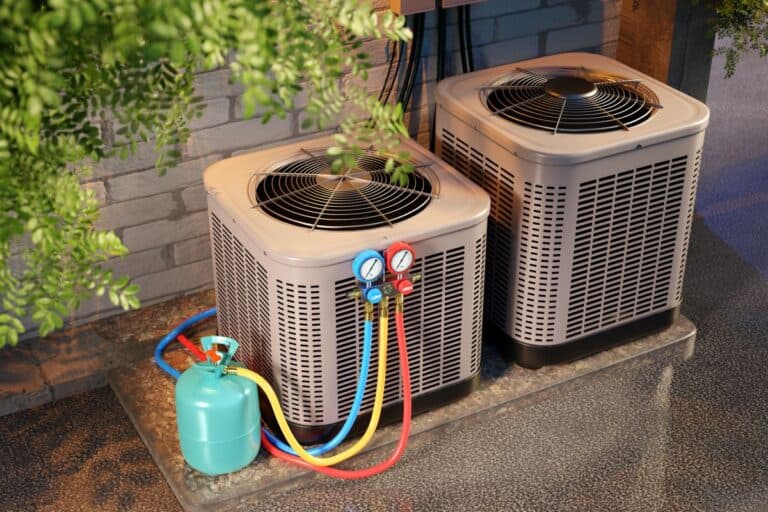
A refrigerant leak means the AC unit cannot transfer heat effectively, resulting in the system blowing warm air, longer run times, and ice forming on the refrigerant lines or evaporator coil. Refrigerant does not deplete under normal operation, so low levels always indicate a refrigerant leak that must be repaired before recharging.
- Signs of a refrigerant leak: The AC system blowing warm air despite running, ice on refrigerant lines or the outdoor unit, hissing or bubbling sounds near the indoor unit, and higher energy bills.
- This is not a DIY fix: Handling refrigerant requires EPA 608 certification. It is illegal for uncertified individuals to purchase or handle refrigerants.
- When to call: Any time you suspect a refrigerant leak. A licensed technician will locate it, repair it, and recharge the system.
4. Dirty Condenser Coils
When the condenser coils on the outdoor condenser unit are coated in dirt, leaves, or debris, heat cannot escape efficiently and the AC system delivers less cold air. In South Carolina’s warm, humid summers, outdoor condenser units accumulate debris quickly.
- Homeowner step: Turn the system off and gently rinse the outdoor condenser unit with a garden hose from the inside out, top down. Never use a pressure washer.
- When professional cleaning is needed: Heavy buildup or bent fins that do not respond to a basic rinse require professional service.
- Prevention: Keep two feet of clearance around the outdoor condenser unit and trim back vegetation regularly.
5. Failed Capacitor or Contactor
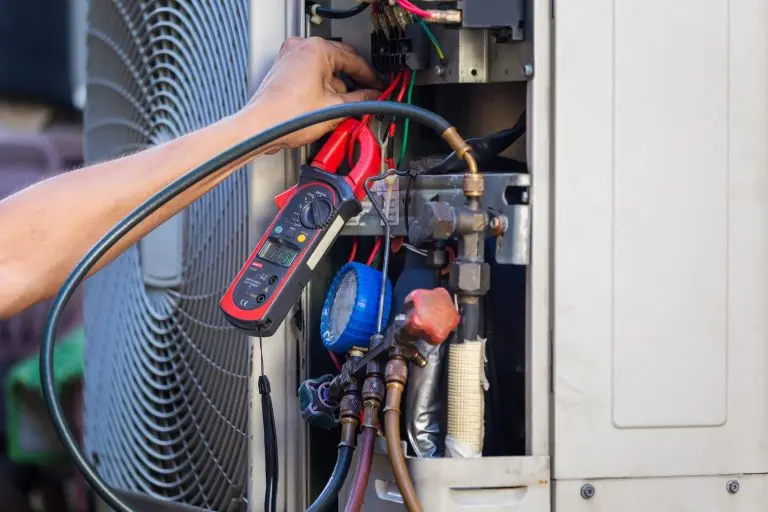
Capacitors and contactors start and run the compressor and fan motors in the outdoor unit. A failed run capacitor may allow the fan to spin weakly while the compressor struggles to start, resulting in the AC system blowing warm air instead of cold air. We are proud to serve home and business owners in Simpsonville, SC, and nearby communities with AC repair, maintenance, and more.
- Signs of the problem: The outdoor condenser unit hums but the fan does not spin, the AC system starts and quickly shuts off, or the outdoor unit does not come on at all.
- This requires a professional: Capacitors store electrical charge and can cause serious injury without proper training.
- Good news: These are among the most affordable AC repairs and catching them early prevents costly compressor damage.
6. Leaky or Blocked Ductwork
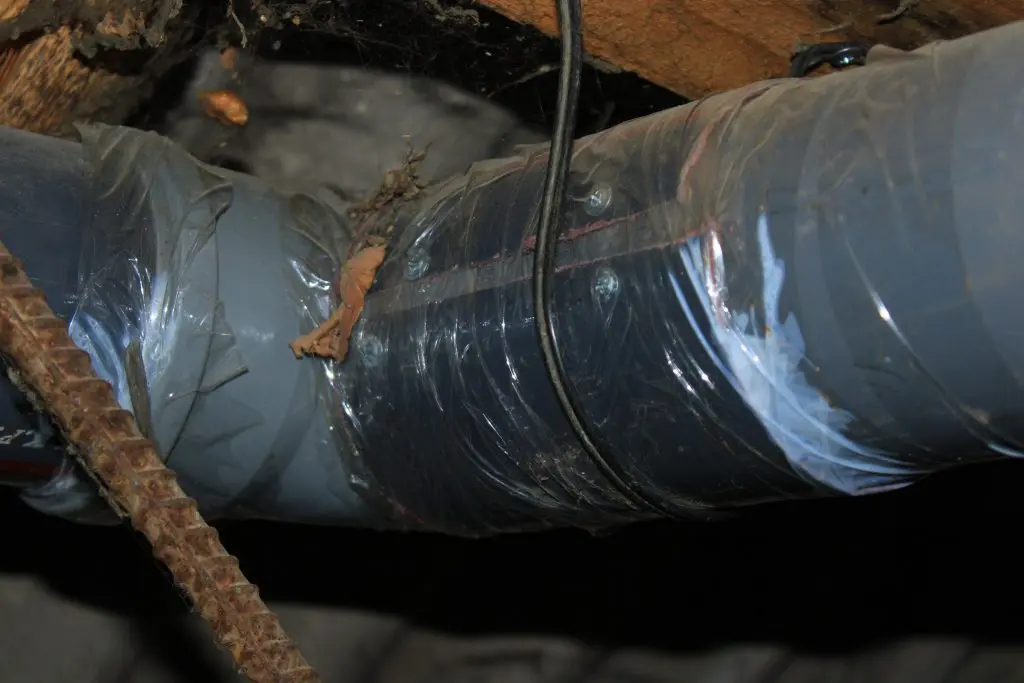
The U.S. Department of Energy estimates up to 30% of cooled air can be lost in a typical home due to leaky ducts, preventing the AC unit from ever blowing cool air consistently throughout the home.
- Signs of duct leaks: Rooms consistently warmer than others, weak airflow from certain vents, higher than expected energy bills, and visible gaps in accessible ductwork.
- Homeowner check: Inspect accessible duct runs in the attic or basement for obvious disconnections or holes.
- Professional repair: Duct sealing with mastic or foil tape, and in some cases full duct replacement, is the appropriate fix.
7. Dirty Evaporator Coil
Fine particles that pass through the air filter accumulate on the evaporator coil surface over time, acting as insulation and preventing the coil from absorbing heat. An AC system with a dirty evaporator coil runs longer cycles, uses more energy, and is never quite blowing cool air the way it should.
- Signs of a dirty evaporator coil: Gradually declining cooling performance over multiple seasons, longer run times, and higher energy bills.
- This requires professional cleaning: Evaporator coil cleaning involves accessing the indoor air handler and applying coil cleaner. It is not a DIY task.
- Prevention: Consistent air filter replacement is the most effective way to keep the evaporator coil clean between service visits.
8. Failing or Failed Compressor
A failing compressor may allow the system to run while blowing warm air instead of cold air, or cause the outdoor unit to shut down shortly after starting. A failed compressor means the AC unit produces no cooling regardless of every other component functioning correctly.
- Signs of compressor trouble: The outdoor condenser unit starts and quickly shuts off, the system runs continuously without blowing cool air, or the outdoor unit does not start despite power being present.
- This always requires a professional: Compressor diagnosis and replacement require refrigerant recovery and specialized tools.
- Repair vs. replace: If the air conditioning system is more than 10 years old or out of warranty, full system replacement is often more economical.
DIY vs. Professional: A Quick Reference
A quick look at which issues you can tackle yourself and which require a licensed technician helps avoid additional damage from attempted repairs on a system that needs professional attention.
| Cause | DIY or Professional? |
| Dirty air filters | DIY |
| Frozen evaporator coil (initial thaw) | DIY, then professional if it recurs |
| Refrigerant leak | Professional only |
| Dirty outdoor condenser unit (basic rinse) | DIY for light buildup, professional for heavy |
| Failed capacitor or contactor | Professional only |
| Leaky ductwork (visible gaps) | DIY for minor gaps, professional for full assessment |
| Dirty evaporator coil | Professional only |
| Compressor failure | Professional only |
When to Repair vs. Replace
For AC systems under 10 years old, repair almost always makes more sense than replacement. The math shifts when the air conditioning system is 12 to 15 years old and facing a major repair like compressor replacement, where fixing an aging AC unit costs close to what a new, more efficient system would.
- How old is the AC system? Units under 10 years old are almost always worth repairing. Those over 15 years with a major failure are strong replacement candidates.
- What is the repair cost relative to replacement? A repair costing 50% or more of a new system’s installed price is generally a replacement candidate.
- How has overall performance been? An AC unit struggling to blow cool air consistently for multiple seasons may not be worth investing heavily in.
Frequently Asked Questions About AC Not Cooling
These are the questions we hear most often from homeowners across the Upstate when their AC system stops cooling effectively. If your situation is not covered here, give us a call, and we will walk you through it.
Why is my AC running but not cooling the house?
The most common reasons are dirty air filters, a refrigerant leak, a frozen evaporator coil, or a dirty outdoor condenser unit. A filter replacement or tripped breaker reset resolves the issue in many cases.
Why is my AC blowing warm air?
Most commonly caused by dirty air filters restricting airflow, a refrigerant leak, a frozen evaporator coil, or a failed capacitor. Work through the quick checks first, then call a professional if the problem persists.
How do I know if my AC has a refrigerant leak?
The most telling signs are the AC unit blowing warm air despite running, ice forming on the refrigerant lines or outdoor unit, and a noticeable increase in energy bills.
How long should it take for my AC to start blowing cold air?
A properly functioning air conditioning system should reduce indoor temperature by one to three degrees per hour. If the AC system runs for several hours without blowing cool air, something is wrong and warrants professional diagnosis.
When Your AC Is Not Cooling, Call Eastergard HVAC
An AC system running but not blowing cool air is working harder than it should and accumulating wear on every component. Eastergard HVAC has been diagnosing and repairing air conditioning systems in the Greenville area since 1989, and our licensed technicians give you straight answers and honest pricing on every service call.
Contact Eastergard HVAC today to schedule your AC repair visit. Call or text us at 864-235-2935 or send us an email, and we will get your AC unit cooling the way it should.
Recent Articles POSTS